
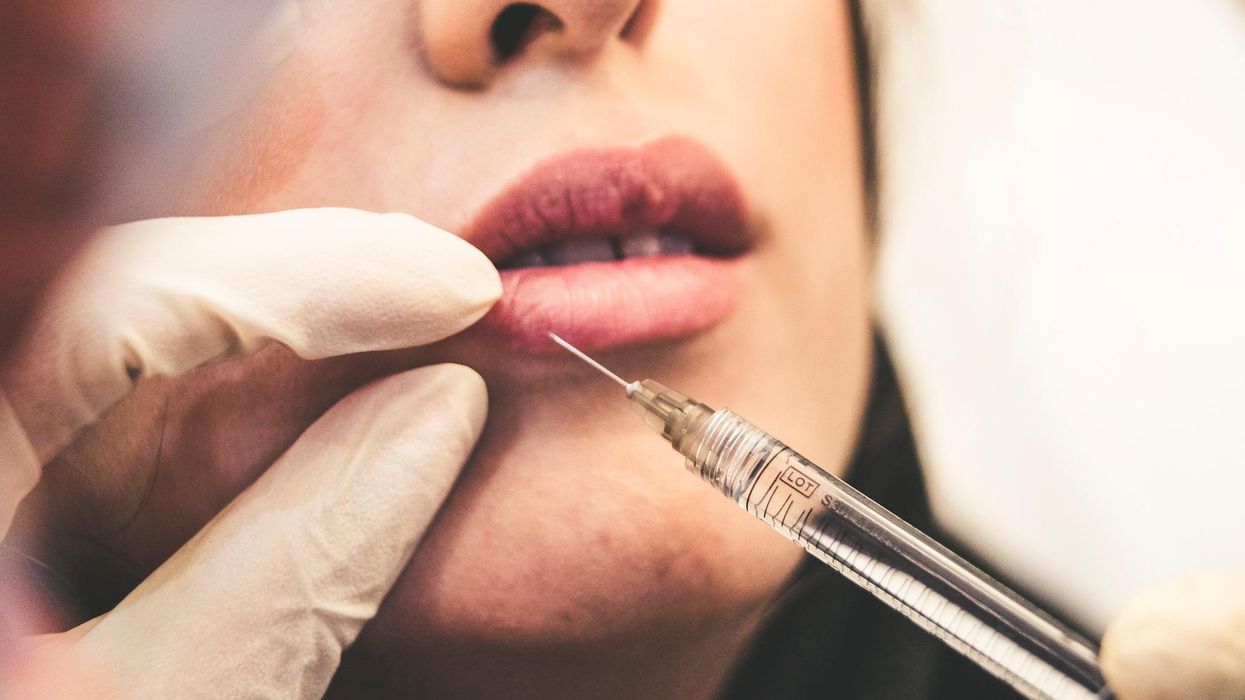
Not to be taken too literally, this doesn’t happen when the body gets tired of filler, per se. Instead, this occurs when filler is overapplied and creates a less than desirable finish. This is a relatively new phenomenon and as such, there aren’t any in-depth studies to draw from, but the proof is literally in patients’ faces. When we asked Dr. Robert Schwarcz, Manhattan-based, double-board certified oculofacial plastic surgeon and Orvos Skin Science founder, to describe filler fatigue from a medical standpoint, he acknowledged that sentiment first.
“There have been no formal studies or biopsies that have been reported in these patients to confidently comment on this with an evidence-based answer,” he acknowledged. But in his opinion, he’d chalk it up to “not all filler being fully metabolized and repeated injections in the face.” Eventually, this leads to prolonged swelling and water accumulation, which can add weight to the face, Dr. Schwarcz explains. And instead of leaving a fuller, more natural-looking finish, the face appears puffy.
When more filler is added to the overdone filler, that’s when filler fatigue can occur. This overapplication can override the efficacy of filler altogether. “If we replenish lost volume, we get a more youthful appearance and lift surrounding structures,” nurse practitioner and Nicole Frontera Beauty founder Nicole Frontera tells Coveteur. “If someone is overfilled and you’re trying to add more with the hope you’ll be able to lift the skin, that’s what I would classify as filler fatigue—your filler will no longer do the job you’re trying to do.”
Ahead, Frontera and Dr. Schwarcz break down how to avoid filler fatigue and what can be done to treat it.
What Is Filler Fatigue?
In order to understand filler fatigue, it’s important to understand what exactly hydrophilic filler is. These types of fillers, like Juvederm Ultra, for example, tend to draw in more water and create a more swollen-looking finish. Dr. Schwarcz believes that these are the more significant culprit of filler fatigue. “This increased water that is being held by the filler molecules can adversely affect your skin’s elasticity,” he explains. “The fillers can also migrate about one to two centimeters from where it was intended to be placed.” This can also be chalked up to lymphatic drainage sites in the face being compromised, leading to lymphatic backup in the form of fluid mounds and festoons.
Certain parts of the face can be more susceptible to filler fatigue. Per Dr. Schwarcz, “cheeks, lips, and lower eyelids are most susceptible to looking overfilled or doughy.”
Does the Brand of Filler Matter?
This is less about specific brands and more about using the right types and amounts of filler in the correct spot. “If you go to a provider that is very educated, it doesn’t matter the brand,” Frontera explains. “Many companies make wonderful products and it’s up to your injector to know what products go in what areas and which tissues. One brand won’t cause this more than another.”
How Is Filler Fatigue Treated?
When Frontera sees a client experiencing filler fatigue, she presents them with two options: dissolving the filler completely or potentially consulting with a plastic surgeon—but neither is a quick fix. “The options I give them are dissolving, which can become a long, unpredictable and challenging process, or if they’re more mature, I might just refer them to a plastic surgeon and explain that maybe the best choice is to do something more invasive,” she says.
But the first approach with filler fatigue should always be to ease off of filler, not ramp it up. “Give your face a rest or even consider utilizing hyaluronidase to dissolve some existing hyaluronic acid filler,” Dr. Schwarcz suggests.